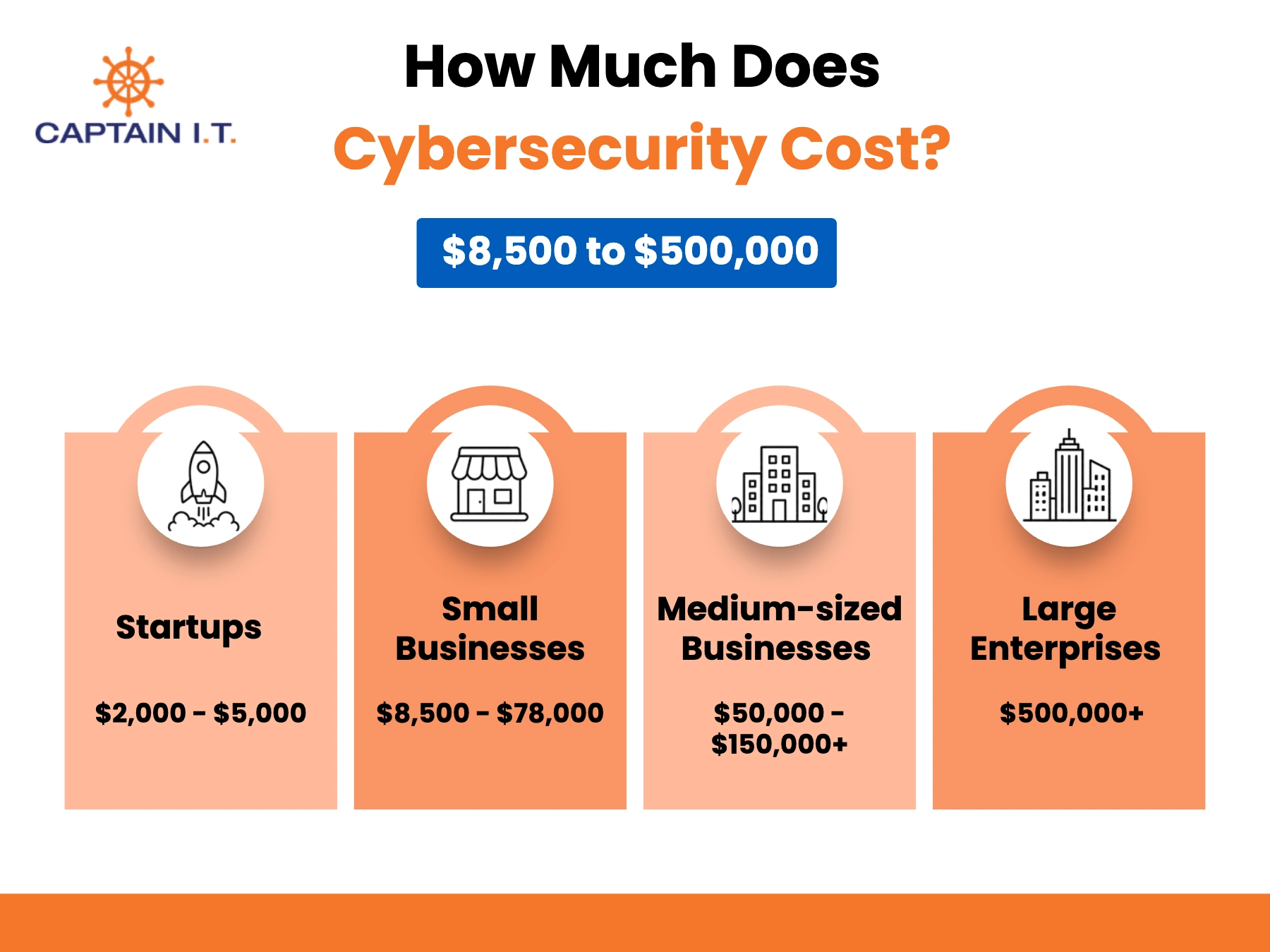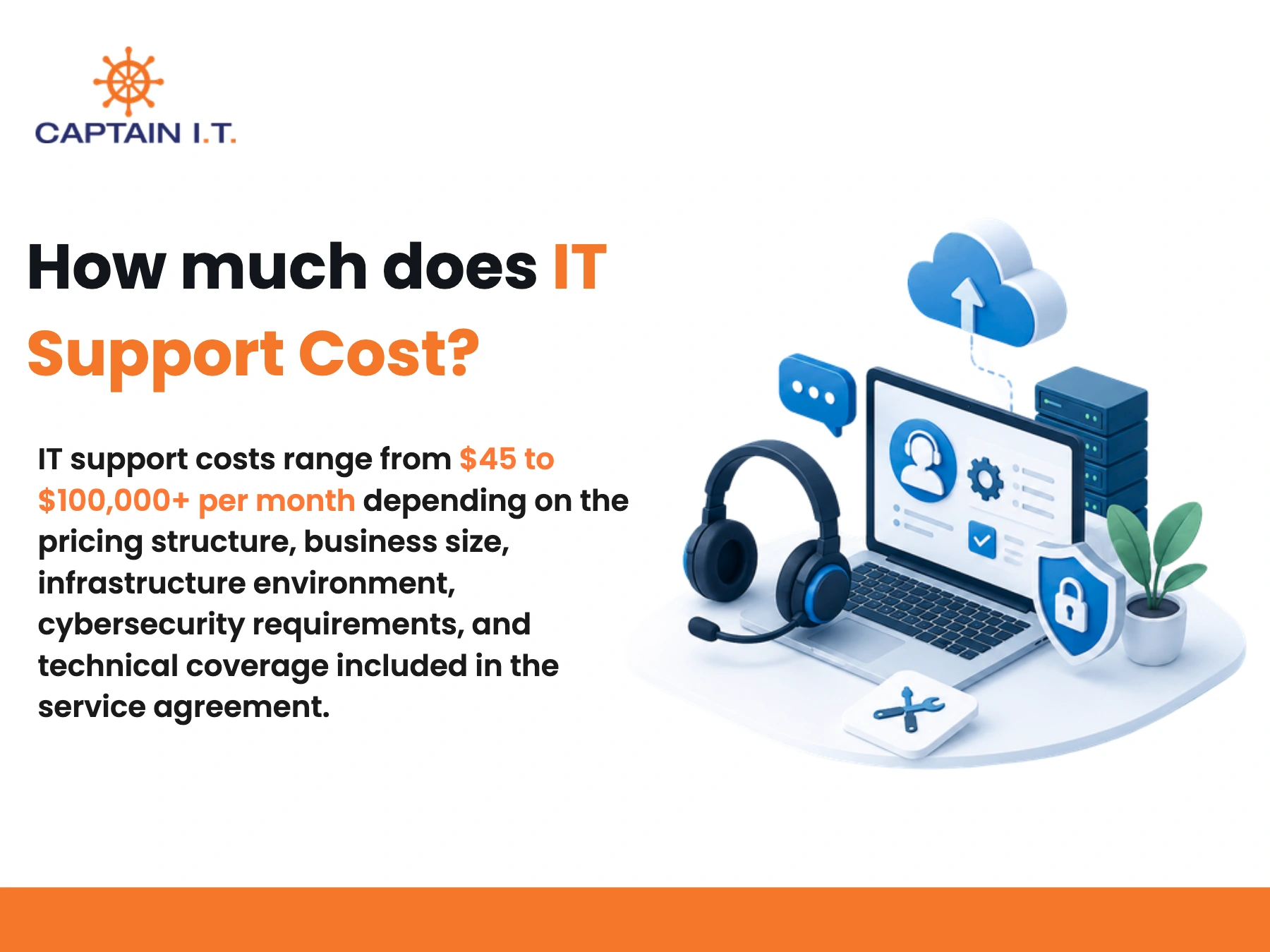
IT support costs range from $45 to $100,000+ per month, depending on the pricing structure, business size, infrastructure environment, cybersecurity requirements, and technical coverage included in the service agreement. Managed IT services often charge $100 to $250 per user monthly, while hourly break-fix support ranges from $75 to $250 per hour. Per-device pricing ranges from $49 to $150 per month, flat-rate managed support ranges from $125 to $250 per user per month, and co-managed IT services range from $45 to $175 per user per month.
Smaller and medium-sized businesses (SMBs) often spend between $1,500 and $5,000 per month on ongoing technical support, monitoring, maintenance, and security management, while enterprise environments can exceed $100,000 per month for large-scale infrastructure oversight, compliance management, around-the-clock operations, and advanced cybersecurity coverage. Pricing also changes across support categories such as remote support, help desk services, on-site support, advanced security support, and 24/7 technical coverage based on response expectations, operational scope, and infrastructure demands.
What is the Average Cost of IT Support?
The average cost of managed IT support ranges from $100 to $250 per user per month, while hourly break-fix IT support costs between $75 and $250 per hour. Per-user pricing for managed IT services falls within the $100 to $250 per-employee monthly range, while flat-fee managed support contracts range from $1,500 to $5,000 per month for small businesses. Small businesses with around 10 employees often spend about $1,500 per month on managed IT support, while mid-sized businesses with 20 to 25 users pay closer to $5,000 per month for fully managed support services, including help desk support, remote monitoring, software updates, and cybersecurity management.
Managed IT support is priced on a per-user monthly basis, via flat-rate support contracts, or on an hourly break-fix basis. Standard remote and help desk support remain near the lower end of hourly pricing, while advanced server, cybersecurity, and emergency IT support services often fall closer to the higher end of the range. Most managed IT services plans include remote support, monitoring, software updates, help desk support, and ongoing system maintenance under a predictable monthly pricing structure.
What is the Average IT Support Cost by Pricing Model?
The average IT support pricing models range from $75 to $250 per hour or $100 to $250 per month, depending on the provider’s billing structure. Per-user managed support plans cost $100 to $250 per employee per month, while per-device support ranges from $49 to $150 per device per month. Hourly break-fix services range from $75 to $250 per hour, whereas flat-rate managed IT contracts often start at around $125 to $ 250 per user per month under fixed-support agreements.
What is the Average IT Support Cost for Per-User Monthly Pricing?
Average per-user monthly IT support pricing ranges from $100 to $250. Under this managed IT support model, businesses pay a fixed monthly rate for each supported employee. For example, a small business with 10 employees paying $150 per user may spend approximately $1,500 per month on ongoing IT support services.
What is the Average IT Support Cost for Per-Device Monthly Pricing?
The average cost of per-device IT support ranges from $49 to $150 per month, depending on the type of hardware supported. Desktop and laptop support costs $75 to $150 monthly, mobile device support ranges from $50 to $75, firewall support costs $30 to $75, and network switch support ranges from $49 to $99 monthly.
What is the Average IT Support Cost for Hourly or Break-Fix Pricing?
The average cost of hourly or break-fix IT support services ranges from $75 to $250 per hour. Standard remote support and help desk services usually fall at the lower end of the hourly range, while advanced server troubleshooting, emergency IT support, and cybersecurity services cost closer to the higher end of the break-fix pricing range.
What is the Average IT Support Cost for Flat-Rate Monthly Pricing?
Average flat-rate monthly IT support pricing ranges from $125 to $250 per user per month. This pricing model uses a fixed monthly support contract for ongoing managed IT services. For a small business, total managed IT support costs range from $1,500 to $5,000 per month, depending on the level of support coverage and service requirements.
What is the Average IT Support Cost for Block-Hour Pricing?
On average, block-hour IT support pricing ranges from $90 to $150 per hour. Businesses purchase a set number of IT support hours in advance and use them for troubleshooting, maintenance, remote support, or technical support services as needed. Block-hour IT support contracts are used for recurring support without full managed IT support plans.
What is the Average IT Support Cost by Business Size?
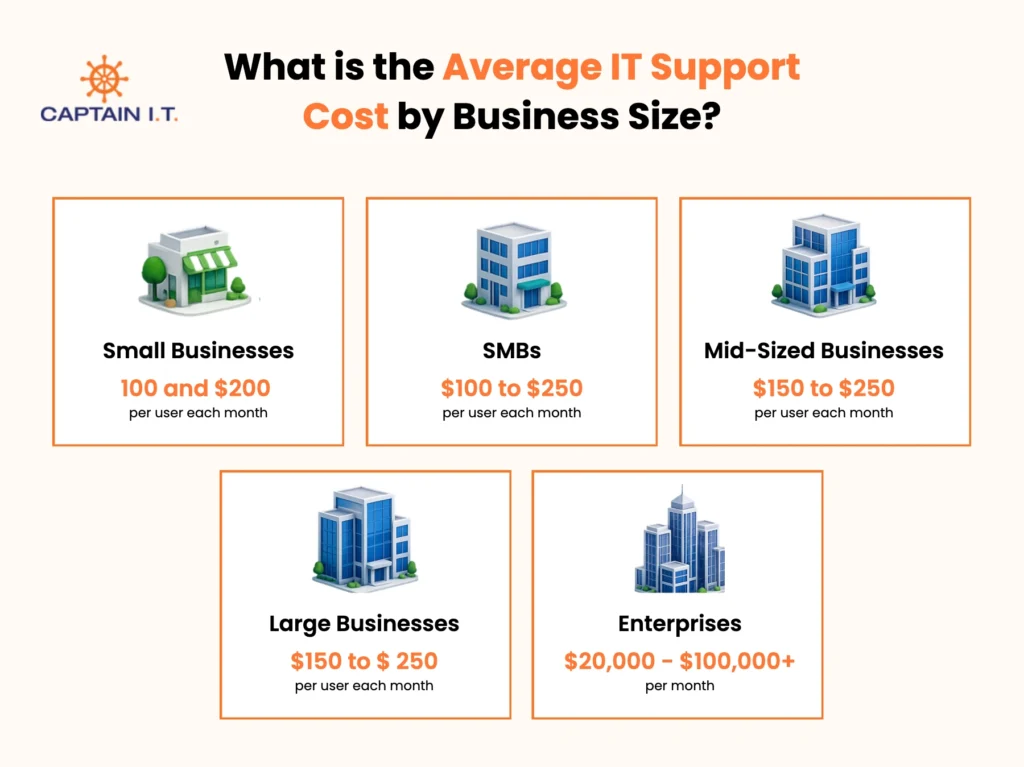
The average IT support cost varies by business size, ranging from $100 per user per month for small businesses to more than $100,000 per month for enterprise-managed IT environments. Smaller organizations usually pay lower monthly support costs due to fewer users and devices, while larger businesses and enterprises require broader support coverage, larger technical teams, and continuous infrastructure management across multiple systems and locations.
What is the Average IT Support Cost for Small Businesses?
The average IT support cost for small businesses ranges from $100 to $200 per user per month. Managed IT support services include routine technical support, monitoring, software updates, and day-to-day system maintenance. Companies with fewer than 20 employees often keep total monthly IT support costs between $1,000 and $4,000, depending on the required level of service and the size of their IT infrastructure.
What is the Average IT Support Cost for SMBs?
For SMBs, the average IT support rate ranges from $100 to $250 per user per month. Businesses in this category often require broader support coverage for larger teams, cloud platforms, internal networks, and cybersecurity monitoring, leading many to spend several thousand dollars per month on ongoing support services.
What is the Average IT Support Cost for Mid-Sized Businesses?
The average IT support cost for mid-sized businesses ranges from $150 to $250 per user per month, reflecting the higher support demands associated with larger internal teams, hybrid work environments, and more complex infrastructure. Businesses at this level spend between $10,000 and $40,000 per month on managed IT support, cloud operations, security monitoring, and continuous technical support services.
What is the Average IT Support Cost for Large Businesses?
Average IT support costs for large businesses range from $150 to $250 per user per month for organizations managing large workforces, multi-site operations, and advanced infrastructure environments. Businesses with hundreds of employees spend $25,000 to $75,000+ per month on enterprise monitoring, cybersecurity support, infrastructure management, and large-scale technical operations.
What is the Average IT Support Cost for Enterprises?
For enterprises, the average IT support cost ranges from $20,000 to more than $100,000 per month for outsourced managed IT support covering enterprise infrastructure, security operations, compliance management, and around-the-clock technical support. Enterprises maintaining internal IT departments may also spend between $60,000 and $150,000+ annually per full-time technician, excluding additional software, infrastructure, and cybersecurity expenses.
What is the Average IT Support Cost by Service Type?
The average cost of IT support by service type ranges from $100 to $400 per month, while advanced cybersecurity and enterprise IT support services can exceed $3,500 per month for organizations requiring continuous monitoring and specialized technical coverage. Managed IT support, remote support, help desk services, on-site technical support, and cybersecurity support use different pricing structures based on the level of technical labor, the monitoring tools used, response requirements, and the infrastructure coverage included in the service.
What is the Average IT Support Cost for Managed IT Support?
For ongoing agreements, the average managed IT support cost ranges from $100 to $300 per user per month. These support plans include remote monitoring, software updates, help desk support, cybersecurity management, system maintenance, and network management, billed on a monthly contract or per-user basis.
What is the Average IT Support Cost for Remote IT Support?
The average cost of remote IT support through recurring support plans ranges from $125 to $250 per user per month. Remote support services include troubleshooting, software support, patch management, monitoring, user assistance, and virtual help desk support, all delivered without on-site technician visits.
What is the Average IT Support Cost for Help Desk Support?
The average cost of help desk support ranges from $100 to $150 per user per month, depending on service coverage and ticket volume. Help desk services include password resets, troubleshooting, software assistance, ticket handling, user support, and day-to-day technical support for employees and connected systems.
What is the Average IT Support Cost for On-Site IT Support?
Average on-site IT support costs range from $100 to $250 per hour, depending on the level of technical expertise and the extent of infrastructure work involved. Businesses use on-site support for hardware installations, server maintenance, network troubleshooting, cabling, infrastructure upgrades, and other technical issues that require physical access to systems or devices.
What is the Average IT Support Cost for Cybersecurity Support?
The average cost of cybersecurity support services ranges from $150 to $400 per month for ongoing security management, while cybersecurity consulting and incident response work costs between $200 and $350 per hour. Managed cybersecurity services start around $2,000 to $3,500 per month for threat monitoring, endpoint protection, firewall management, vulnerability management, and compliance support.
What is the Average IT Support Cost by Support Level?
The average cost of IT support by support level ranges from $75 to more than $400 per user per month, depending on the level of response coverage, monitoring depth, security management, and technical responsibility included in the support plan. Basic support plans range from $75 to $150, standard support from $100 to $200, 24/7 support from $250 to $300, and advanced security support from $250 to $400+ per user per month.
What is the Average IT Support Cost for Basic Support?
The average cost of basic IT support ranges from $75 to $150 per user per month through entry-level support plans that cover standard troubleshooting, software updates, remote assistance, and limited monitoring. This support level is billed through monthly support agreements and is suitable for businesses that require routine technical support during standard operating hours.
What is the Average IT Support Cost for Standard Support?
Average standard IT support costs range from $100 to $200 per user per month for managed support services, or $75 to $200 per hour for ad hoc break-fix support. This support level includes ongoing monitoring, help desk coverage, routine maintenance, and technical troubleshooting billed through recurring support contracts or hourly support rates.
What is the Average IT Support Cost for 24/7 Support?
For organizations requiring continuous coverage, the average 24/7 IT support cost ranges from $250 to $300 per user per month with around-the-clock monitoring. These support agreements include after-hours response coverage, emergency support access, ongoing monitoring, and priority issue resolution under dedicated monthly support contracts.
What is the Average IT Support Cost for Advanced Security Support?
The average cost of advanced security support ranges from $250 to $400+ per user per month for managed security services or $150 to $300 per hour for security consulting and project-based support. This support level includes threat monitoring, firewall management, endpoint protection, incident response support, vulnerability management, and compliance-related security oversight.
What is the Average IT Support Cost for Co-Managed Support?
The average cost of co-managed IT support ranges from $45 to $175 per user per month under shared support agreements between internal IT teams and external managed service providers. These support plans include monitoring, escalation support, infrastructure management, technical assistance, and supplemental IT coverage billed through monthly support contracts.
What are the Factors that Affect IT Support Cost?
IT support costs depend on the number of users and devices, infrastructure complexity, support coverage, cybersecurity requirements, response time expectations, and the contract terms of the service agreement. Businesses requiring advanced monitoring, compliance support, faster response coverage, or on-site technical support often face higher monthly IT support costs, while long-term contracts, remote support services, and limited support coverage can help stabilize ongoing pricing.
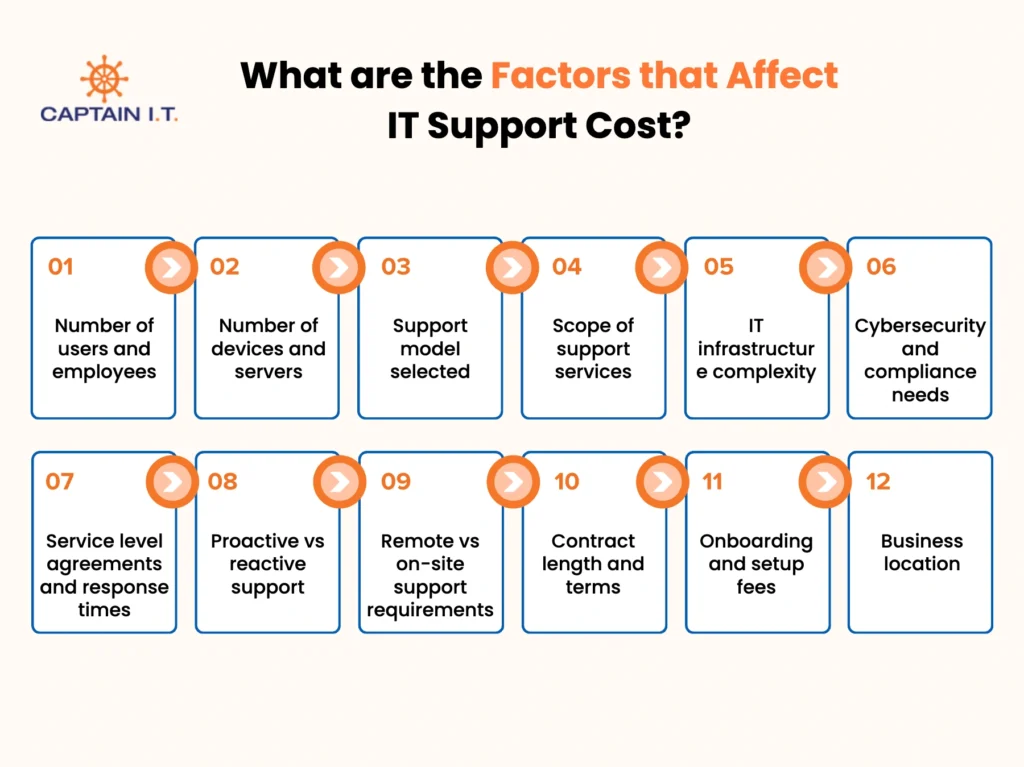
12 factors that affect IT support cost are:
- Number of users and employees
- Number of devices and servers
- Support model selected
- Scope of support services
- IT infrastructure complexity
- Cybersecurity and compliance needs
- Service level agreements and response times
- Proactive vs reactive support
- Remote vs on-site support requirements
- Contract length and terms
- Onboarding and setup fees
- Business location
- Number of users and employees
Businesses with more employees often incur higher IT support costs because each additional user increases help desk demand, account management, software licensing, monitoring requirements, and the technical support workload. Since many managed IT providers bill per user monthly, larger teams directly increase recurring support pricing and ongoing service coverage requirements.
- Number of devices and servers
Additional desktops, laptops, mobile devices, servers, firewalls, and network equipment increase IT support pricing because every managed device requires monitoring, maintenance, updates, troubleshooting, and security oversight. Businesses operating large server environments or multiple connected systems often face higher monthly support fees due to expanded infrastructure coverage and management requirements.
- Support model selected
The IT support model changes overall pricing by determining whether support is billed monthly, hourly, prepaid, or through shared support agreements. Managed IT support creates fixed, recurring costs, while break-fix support results in variable expenses based on labor hours, emergency incidents, and technical service requests throughout the contract period.
- Scope of support services
Expanding the scope of support services increases IT support costs through additional monitoring, technical labor, software management, cybersecurity oversight, and infrastructure administration. Businesses that include cloud management, disaster recovery, backup management, and help desk coverage in their contracts often pay higher monthly support fees for broader technical service coverage.
- IT infrastructure complexity
Complex IT environments increase support costs as advanced networks, hybrid cloud systems, multi-site operations, and integrated business applications require more technical management and troubleshooting. Businesses operating older infrastructure, custom software environments, or enterprise-grade systems often require higher levels of technical support and continuous infrastructure monitoring.
- Cybersecurity and compliance needs
Cybersecurity requirements increase IT support costs through firewall management, endpoint protection, threat monitoring, compliance reporting, vulnerability management, and incident response planning. Businesses operating under HIPAA, PCI-DSS, SOC 2, or other regulatory standards often pay higher monthly support fees due to additional security oversight and compliance-related technical requirements.
- Service level agreements and response times
Stricter response guarantees and higher service-level agreements increase IT support costs through expanded staffing requirements, escalation coverage, and continuous monitoring. Businesses requesting priority response support, guaranteed uptime commitments, or after-hours service access often pay premium support rates for faster issue resolution and extended technical coverage.
- Proactive vs reactive support
Proactive IT support increases upfront monthly costs due to preventive maintenance, system monitoring, software patching, and ongoing infrastructure oversight. Reactive break-fix support may initially reduce recurring contract pricing. However, emergency repairs, downtime, and recurring technical failures can increase long-term operational and support costs.
- Remote vs on-site support requirements
On-site support requirements increase IT support pricing through technician travel, hardware installations, emergency dispatch services, and physical infrastructure work. Remote support services help reduce recurring support expenses by enabling technicians to troubleshoot systems, manage devices, and resolve technical issues without on-site service visits.
- Contract length and terms
Long-term IT support agreements can stabilize pricing through fixed monthly contracts and bundled service discounts. Short-term agreements or flexible month-to-month contracts often increase support pricing because providers face less predictable service demand, fluctuating workloads, and reduced stability in long-term operational planning.
- Onboarding and setup fees
Onboarding and setup requirements increase first-year IT support costs by requiring infrastructure documentation, deployment monitoring, system migration, security configuration, and technical environment preparation. Businesses transitioning from unsupported systems or outdated infrastructure may require additional remediation before managed IT support services can begin in full.
- Business location
IT support pricing varies by location due to differences in labor costs, technician availability, travel requirements, and regional market demand. Businesses operating in large metropolitan areas or requiring frequent on-site support often face higher service rates than organizations located in lower-cost regional markets.
How do you calculate IT Support Cost?
Calculating IT support costs involves multiplying the billing unit by the service rate, then adding setup fees, monitoring tools, cybersecurity services, software licensing, and any additional support charges. Managed IT support calculations use per-user or per-device monthly pricing, while break-fix support relies on hourly labor rates. In-house IT calculations combine salaries, infrastructure, and operational expenses, whereas help desk and per-ticket pricing depend on support volume, response coverage, and technician workload.
- How do you calculate the monthly managed IT Support Cost?
To calculate the monthly managed IT support cost, multiply the number of supported users or devices by the provider’s monthly rate, then add the costs of services such as cybersecurity monitoring, cloud management, backups, and onboarding fees. A common calculation format is:
Users or Devices × Monthly Rate + Additional Services = Total Monthly IT Support Cost.
- How do you calculate the hourly IT Support Cost?
To calculate the hourly IT support cost, multiply the total support hours by the hourly labor rate, and include additional charges for emergency response, after-hours service, or on-site visits, when applicable. Businesses often estimate project-based or break-fix support using the formula:
Hourly Rate × Total Support Hours = Total Support Expense
- How do you calculate In-House IT Support Cost?
To calculate in-house IT support cost, combine employee salaries, payroll taxes, benefits, training expenses, software subscriptions, hardware purchases, cybersecurity tools, and infrastructure maintenance into a single annual estimate. Businesses also account for overtime, office expenses, recruitment costs, and certification requirements when calculating total internal IT operational expenses.
- How do you calculate IT Help Desk Support Cost?
To calculate IT help desk support cost, estimate the number of supported employees, expected ticket volume, support hours, and monitoring coverage included within the service agreement. Providers may use per-user monthly pricing or ticket-based billing structures, while additional escalation support and software management services increase total recurring support expenses.
- How do you calculate Cost Per IT Support Ticket?
To calculate the cost per IT support ticket, divide the total IT support expense by the number of resolved tickets during a specific period. Businesses often include technician labor, software tools, escalation costs, infrastructure overhead, and management expenses in their calculations. The standard formula is: Total IT Support Cost ÷ Total Tickets Resolved = Cost Per Ticket.
How does IT Support Cost Compare Across Support Models?
Outsourced IT services range from $80 to $500 per user monthly, while an in-house IT employee can cost $5,000 to $10,000+ per month. Co-managed IT support ranges from $45 to $175 per user per month, break-fix support costs $75 to $250 per hour, and retainer-based IT support often falls between $1,500 and $3,000 per month for small businesses. IT support pricing varies across support models based on staffing costs, coverage levels, and billing structures.
- How does IT Support Cost Compare with In-House IT Support?
In-house IT support incurs the highest long-term staffing costs, as businesses must cover salaries, benefits, software, training, and infrastructure expenses. A single in-house IT employee can cost $5,000 to $10,000+ per month, making internal support one of the most expensive IT support models for ongoing operations.
- How does IT Support Cost Compare with Outsourced IT Support?
Outsourced IT support lowers staffing and infrastructure costs through fixed recurring service agreements. Most outsourced IT services range from $80 to $500 per user per month, giving businesses more predictable support expenses without maintaining a full internal IT department or incurring full-time technical staffing costs.
- How does IT Support Cost Compare with Co-Managed IT Support?
Co-managed IT support reduces the cost of expanding internal IT teams by sharing technical responsibilities with an external provider. Pricing ranges from $45 to $175 per user monthly for this IT support, creating a shared support cost structure that combines internal oversight with outsourced technical coverage and monitoring services.
- How does IT Support Cost Compare with Break-Fix IT Support?
Break-fix IT support results in variable support costs, as businesses pay only when technical issues arise. Hourly rates range from $75 to $250 per hour, which can reduce recurring contract expenses initially but increase long-term support costs due to emergency repairs, downtime, and after-hours service charges.
- How does IT Support Cost Compare with Retainer-Based IT Support?
Retainer-based IT support creates fixed, recurring support costs through prepaid monthly service agreements that cover a set amount of technical support. Small business retainer plans often range from $1,500 to $3,000 per month, helping stabilize support costs while reducing the unpredictability associated with hourly break-fix support.
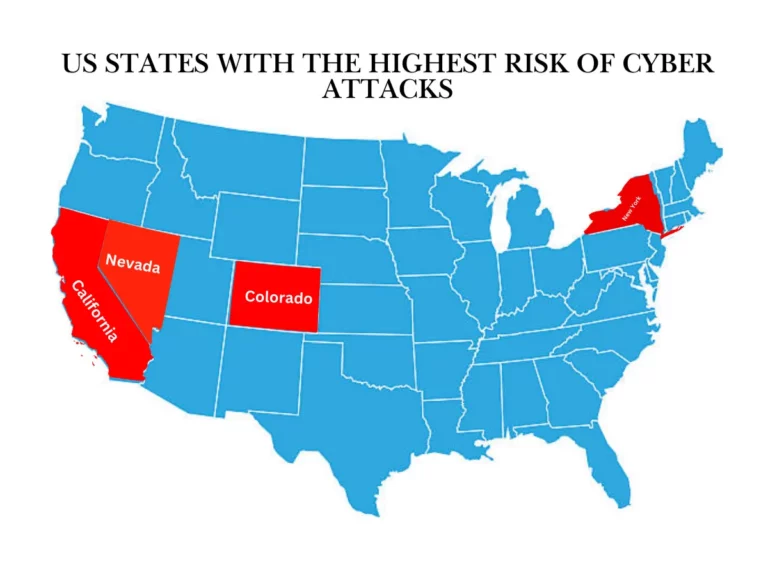
How does IT Support Cost Vary by Location?
IT support costs vary by location due to differences in labor rates, local market demand, technician availability, travel requirements, and on-site support coverage. Businesses in larger metropolitan areas or high-demand technology markets often face higher recurring support costs and hourly service rates than those in smaller regional markets, which have lower operational overhead and reduced service demand.
- How much does IT Support Cost in Riverside?
IT Support Cost in Riverside ranges from $100 to $250 per user per month for managed IT support, while hourly technical support ranges from $75 to $150 per hour. Local pricing stays relatively moderate compared to larger California business hubs, although on-site support requests and emergency service coverage can still increase recurring support expenses.
- How much does IT Support Cost in Orange County?
IT Support in Orange County ranges between $100 and $250 per user per month for managed support services. Higher labor costs, dense business activity, and strong demand for rapid-response IT support often push pricing toward the upper end of regional California IT service markets.
- How much does IT Support Cost in Sacramento?
IT Support in Sacramento ranges between $100 and $250 per user per month for managed IT services, while break-fix support ranges from $125 to $250 per hour. Businesses needing rapid-response coverage, complex infrastructure management, or multi-site operations may experience higher ongoing costs.
- How much does IT Support Cost in Rocklin?
IT Support Cost in Rocklin ranges from $100 to $250 per user per month for managed IT services, or $75 to $250 per hour for break-fix support. Businesses requiring ongoing infrastructure maintenance, regular on-site technical assistance, or broader network management often experience higher recurring service expenses within the local market.
How Do You Find Reliable IT Support for Your Business?
To find reliable IT support for your business, start by identifying your internal technical requirements, including users, devices, applications, security needs, and response time expectations. Then compare providers based on experience, service quality, cybersecurity coverage, pricing, and communication. Businesses should also review service agreements and contract terms before making a final decision. If additional guidance is needed during provider evaluation or infrastructure planning, professional IT support services can help more accurately assess support requirements and technical fit.
Here are the key steps businesses should follow when evaluating and choosing a reliable IT support provider:
- Assess your IT support needs
Identify the number of users, devices, locations, business applications, and security requirements your company needs to be supported before contacting providers. Defining support expectations early helps narrow provider options, improves pricing accuracy, and prevents businesses from paying for unnecessary support coverage or missing critical technical services.
- Shortlist providers with relevant industry experience
Focus on IT support providers that already support businesses in your sector, especially if your operations involve healthcare systems, financial platforms, legal software, cloud infrastructure, or regulatory compliance requirements. Vendors familiar with your business environment can integrate more quickly into existing workflows, understand industry-specific software requirements, and handle technical challenges with less operational disruption during onboarding.
- Check provider reputation and client references
Check the IT support provider’s reputation through online reviews, testimonials, case studies, and direct client references before signing a contract. Businesses should ask about response quality, escalation handling, communication standards, and long-term support performance before selecting a provider for ongoing IT management responsibilities.
- Review service level agreements and response times
Examine service level agreements carefully to understand guaranteed response times, support hours, escalation procedures, and uptime commitments. Faster response guarantees and after-hours support coverage may increase monthly pricing, although stronger SLAs often reduce the risk of downtime and improve overall operational continuity.
- Confirm 24/7 monitoring and proactive maintenance
Confirm that the MSPs offer 24/7 monitoring, preventive maintenance, software patching, and ongoing infrastructure management, rather than only reactive troubleshooting. Proactive support helps reduce downtime, security incidents, emergency repair costs, and recurring technical failures across business infrastructure environments.
- Evaluate cybersecurity and disaster recovery coverage
Verify whether the IT service provider includes firewall management, endpoint protection, backup management, disaster recovery planning, vulnerability monitoring, and incident response support within the service agreement. Strong cybersecurity coverage improves operational resilience and reduces the financial risk associated with ransomware, outages, and data loss incidents.
- Verify staff certifications and technical expertise
Check whether IT support engineers hold certifications from Microsoft, Cisco, CompTIA, AWS, or other cybersecurity providers relevant to your infrastructure. Certified technical staff often provide stronger troubleshooting capabilities, better infrastructure management, and more reliable support for complex business environments.
- Compare pricing transparency and contract terms
Review pricing structures, onboarding fees, contract length, service exclusions, and after-hours support charges before signing an agreement. Transparent pricing reduces the risk of hidden costs and helps businesses compare providers more accurately across monthly support costs, hourly labor rates, and included service coverage.
- Review communication quality and support process
Evaluate how IT service providers handle support requests, escalation procedures, ticket updates, and ongoing client communication during technical issues. Clear communication processes improve the speed of issue resolution, reduce operational confusion, and create more reliable long-term support experiences for internal teams and business stakeholders.